Edge AI Computing to Reduce Centralized Processing Bottlenecks
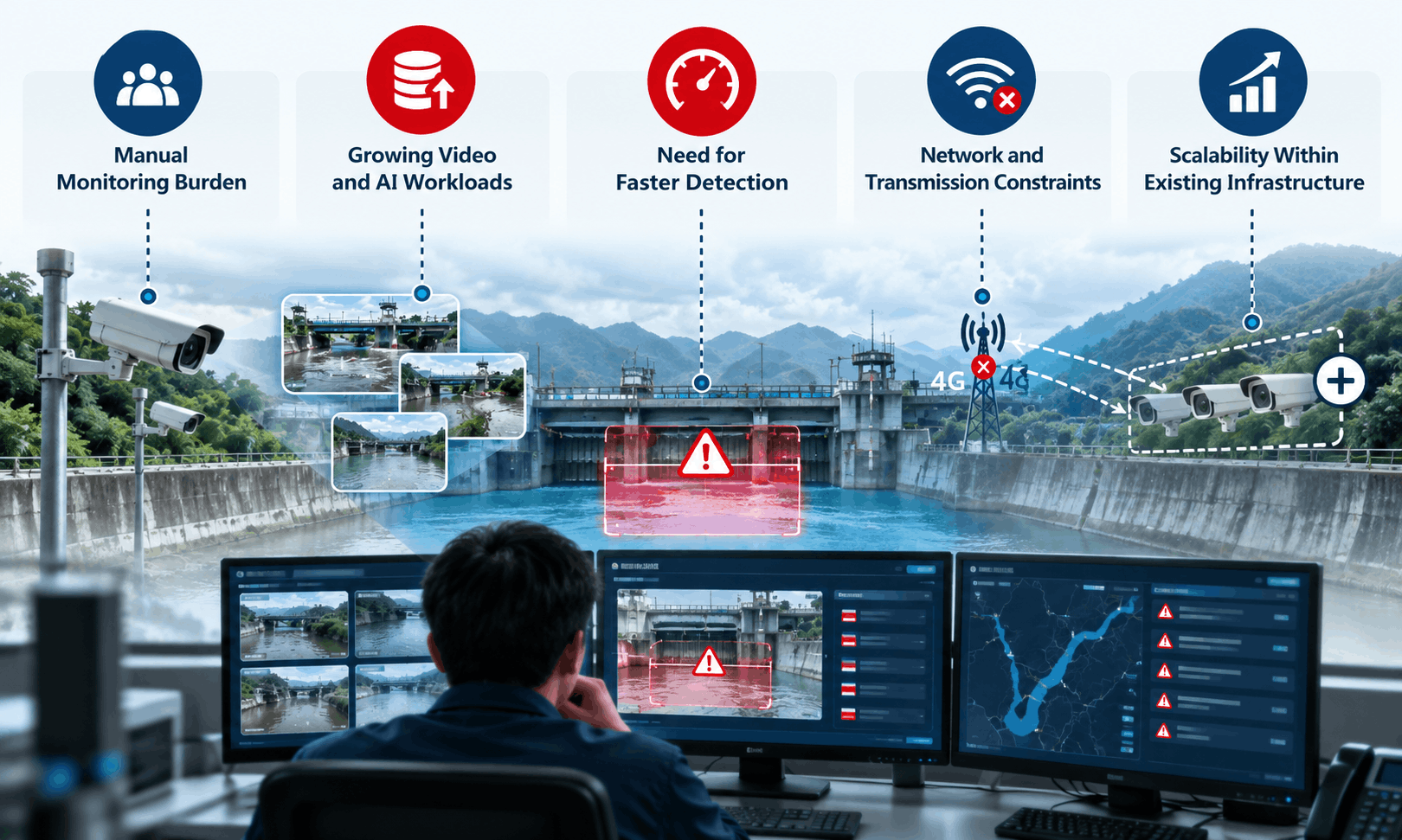
ASRock Industrial collaborated with Focus Intelligence Technology (FIT) to deploy an edge AI-powered water monitoring solution at Taiwan’s Yuanshanzi Flood Diversion Channel. To address the growing demands of centralized video processing, the solution adds local AI computing capacity through ASRock Industrial’s AI BOX-A395 platform, bringing video analysis closer to its source while retaining the existing centralized water management infrastructure. Powered by the AMD Ryzen™ AI Max+ 395 processor, AI BOX-A395 supports local video processing, AI inference, and event evaluation. Its CPU, GPU, and NPU architecture, combined with up to 128GB of unified memory and up to 126 TOPS of overall AI performance, provides computing resources for continuous video streams and concurrent AI workloads. By distributing AI processing closer to the cameras, the solution reduces reliance on centralized inference for time-sensitive analysis and provides a scalable way to expand computing capacity as monitoring demands grow.
AI-Powered Water Recognition and Second-Level Event Detection
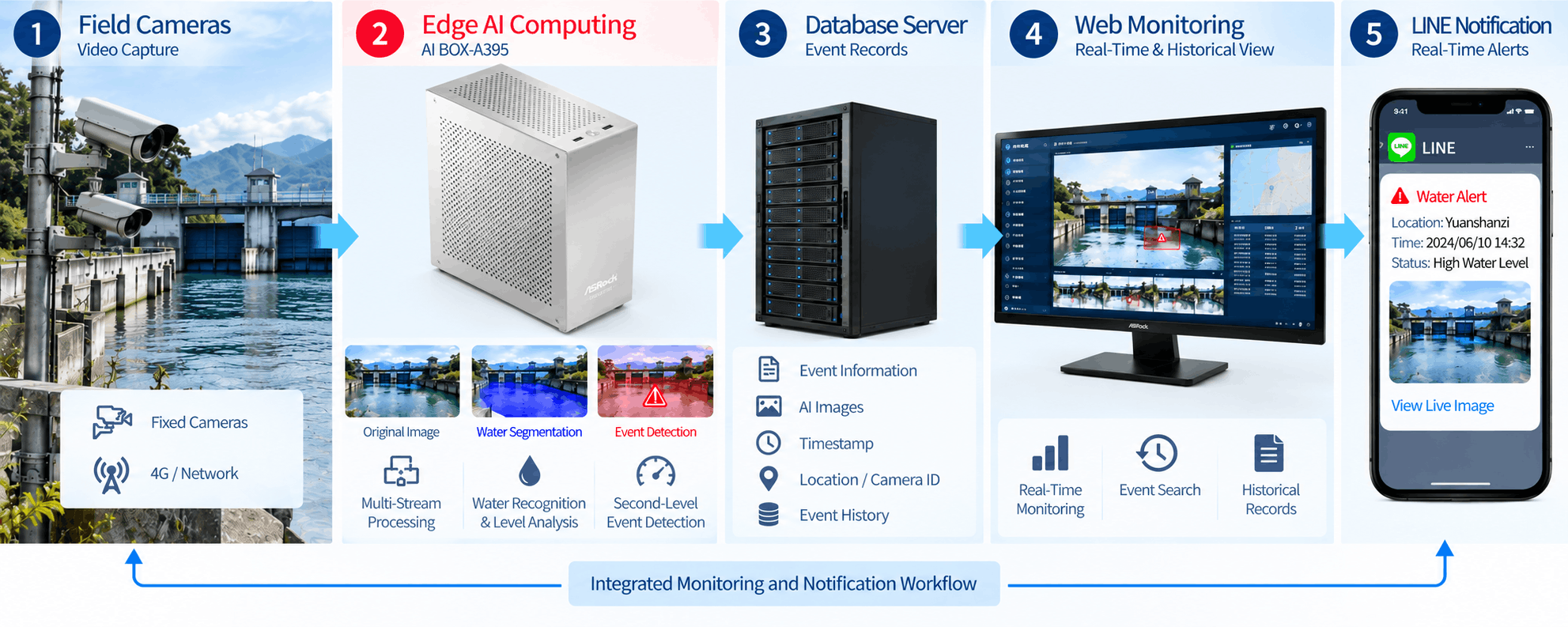
To reduce the burden of manual monitoring and accelerate the identification of critical water conditions, the solution uses AI-based image segmentation to identify water surfaces and generate water masks within camera images. By comparing detected water boundaries against predefined regions of interest (ROIs) and reference markers, the application estimates water levels and tracks changes in water coverage. Consecutive-frame analysis and configurable thresholds help determine whether detected conditions persist before classifying events as Normal, Watch, or Alert. This automated evaluation helps operators identify potentially significant changes without relying solely on continuous visual inspection, while helping distinguish meaningful water level changes from transient visual variations caused by reflections, lighting, or moving water. Running the recognition and event evaluation workflow on AI BOX-A395 enables local analysis closer to the video source. The completed proof of concept (PoC) demonstrated a shift from minute-level recognition to second-level processing, supporting faster identification of changing water conditions and more timely event notifications.
Integrated Event Management with Reduced Network Dependence
To address network transmission demands and preserve existing operational workflows, AI-generated results are integrated with the database server and web-based monitoring platform, creating structured event records that include camera location, timestamp, estimated water level, event classification, and supporting AI-generated images. Rather than requiring every video analysis task to depend on centralized inference, the solution enables local AI processing while making relevant event information and supporting evidence available to the central platform. Through the monitoring interface, operators can review current conditions, access historical records, and examine visual evidence. The solution also integrates LINE notifications to deliver configured alerts and relevant event information to personnel for follow-up.
The PoC evaluated key operational aspects, including AI server availability, database write success, web and LINE notification delivery, and stability during extended operation. By adding an edge AI layer to the established architecture, the solution expands local processing capabilities while preserving existing data management, monitoring, and notification workflows—without requiring a complete replacement of the water management infrastructure.